



 Enquire Now
 Receive a Brochure
 Check Your MBA Eligibility
 Reserve Your Spot
 Apply Today
 Refer a Friend



 Go back
What business course should you study for career advancement in 2026?

SHARE ON




Professionals at every stage of their career face the challenge of staying relevant, building new skills and preparing for advancement. With so many study options available, it can be difficult to know which course is best for you.
This guide helps you navigate the choices by comparing three types of business study: short business courses, graduate or postgraduate certificates and Master of Business Administration (MBA) programs. We’ll break down each option’s purpose, duration, commitment, outcomes and the types of professionals they are ideal for, so you can make an informed decision about the next step in your career.
TL;DR
No matter your career stage, the right course can support your professional growth. There’s no single correct option – choosing the right business study option depends on your unique goals and readiness for study.
- If you need to quickly build or update a specific skill, a short course may be the right fit.
- If you want to formalise your experience and develop broader business capability, a Graduate Certificate can provide a strong foundation.
- If your goal is to move into senior leadership and shape organisational strategy, an MBA can offer the advanced knowledge and strategic capability to support your goals.
Key factors
Choosing the right business course starts with understanding your unique needs. The questions below will help you think about where you are in your career, what you want to achieve, and how much time and resources you can invest.
Career goals: What are your short-term and long-term ambitions? Do you want more responsibility, a promotion or a career change?
Time commitment: How much time can you commit to studying? A short course can take weeks, a postgraduate course can take months, while an MBA can take years.
Budget: What are the upfront costs vs return on investment? Will your employer sponsor some or all of the fees?
Short-term vs long-term impact: Is it more important to build skills now or credentials for future roles?
Entry requirements: What previous qualifications and experience do you have? Generally, short courses are open entry, while MBAs require prior academic qualifications and professional experience.
Pathways: Can this qualification lead to a higher one? For example, the AIB GCM is an entry point and the first stage of the AIB MBA.
Short business course
Short business courses help professionals build relevant skills without the time or financial commitment of a full qualification. The duration and focused content make them useful across all career stages, from early career professionals building capability to experienced professionals staying current with trends.
Purpose: Short business courses focus on building specific, in-demand skills that can be applied immediately in the workplace. They are often designed around emerging trends or capability gaps such as digital marketing, cyber security, sustainability and AI, helping professionals stay current and effective in their roles.
Duration: Short courses typically range from a few hours to several weeks. While some follow a structured schedule, many are self-paced with on-demand modules, allowing learners to complete the content flexibly within a set timeframe.
Commitment: Low – Short courses generally require fewer assessments and less sustained study than formal qualifications. This makes it easy to balance study with other commitments while exploring the benefits of further postgraduate learning.
Outcome: Learners typically gain a non-award credential or certificate, along with targeted skills that can be applied immediately in their role. While they don’t carry the same weight as a postgraduate qualification, their value lies in speed and relevance. Common outcomes include upskilling in a specific capability, improved performance in day-to-day tasks and increased confidence in using new tools or approaches. These credentials can support career progression by helping professionals stay competitive and demonstrate in-demand skills to employers.
Who it’s for: While short courses can be especially useful at the beginning of your career, they are valuable across all career stages:
- Early-career professionals building foundational skills
- Mid-career professionals filling capability gaps or adapting to industry changes
- Managers and leaders looking to stay current with emerging trends
Graduate or postgraduate certificate
Graduate or postgraduate certificates are designed for professionals with workplace experience who want to build on their existing capability and progress their careers.
One of the most popular postgraduate courses is the Graduate Certificate in Management (GCM). Unlike shorter courses that target specific skills, the GCM provides foundational business knowledge, helping professionals connect strategy and leadership with day-to-day decision-making in their workplace or business.
We’ll explore AIB’s GCM program in more detail below.
Purpose: The AIB GCM curriculum primarily covers essential leadership and strategic management skills. It also develops core business knowledge, helping you understand how different parts of an organisation work together. The program is designed to strengthen how these skills are applied in practice, particularly when managing people, priorities and business outcomes.
Duration: AIB’s online course has 4 subjects designed to be completed in 8 months while working but can be completed in as little as 4 months, subject to meeting concurrent study criteria.
Commitment: Moderate – The AIB GCM is more structured than a short course, requiring regular engagement with course material and assignments throughout each subject. However, online courses such as AIB’s allow you to balance your studies with work and other commitments.
Outcome: The AIB GCM is a recognised postgraduate qualification that strengthens management capability. Graduates improve their ability to handle day-to-day management responsibilities while building the skills to take on more complex challenges. This can support career progression and help professionals stand out in a competitive job market. Beyond its immediate impact, the GCM also provides a strong foundation for further study or career progression, with AIB graduates able to transition seamlessly into the MBA.
Who it’s for: The AIB Graduate Certificate in Management is designed for professionals with established relevant workplace experience who meet AIB’s entry requirements, ensuring students can apply learning in a real-world context.
- Mid-level managers aiming for career progression without committing to a full MBA
- Professionals taking on increased responsibility or broader roles within their organisation
- Experienced workers seeking to formalise their experience with a recognised qualification
MBA (Master of Business Administration)
An MBA is the most comprehensive option in postgraduate business study, best suited to professionals who want to move into senior leadership, executive roles or drive strategic impact at an organisational level. Unlike shorter qualifications that focus on specific skills or foundational management, an MBA develops a holistic understanding of how businesses operate, equipping leaders to make complex decisions across multiple functions.
AIB’s MBA has an in-depth curriculum that covers key business areas including finance, marketing, human resources, operations and strategic management. The program also offers specialisation streams and elective subjects, allowing you to tailor your studies to your career goals and interests. You’ll learn through practical application rather than exams, allowing you to work on real business challenges throughout your study.
Purpose: The MBA develops the advanced knowledge and leadership capability required to operate at a senior level. It provides a comprehensive, integrated view of business, empowering professionals to lead organisational success.
Duration: The duration of an MBA program varies depending on the program type and study mode. AIB’s online MBA allows students to study while working full time to finish in 2 years (standard study load of 6 subjects per year). Students also have the option to accelerate their studies to finish in just 12 months, subject to meeting concurrent study criteria.
Commitment: High – An MBA is a significant investment of time lasting at least one year. Each subject requires roughly 150 hours of study, or about 15–20 hours per week. However, modern online MBAs, such as the AIB MBA, offer flexible delivery, allowing you to study anytime, anywhere within the term schedules.
Outcome: An MBA is a highly regarded qualification recognised by employers worldwide. It develops well-rounded business leaders with strong capabilities across core functions, along with the ability to lead, communicate, problem solve, make strategic decisions and drive success. This may support career progression, broader leadership opportunities and increased professional mobility.
Who it’s for: For many professionals, an MBA represents a transformational step in their career.
- Mid to senior managers seeking executive roles
- Senior leaders looking to expand strategic influence and organisational impact
- Professionals considering career pivots or entrepreneurship
Summary of business courses for career advancement
| Course | Purpose | Duration | Commitment | Outcomes | Who it’s for |
| Short business course | Builds practical, in-demand skills in a focused area that can be applied quickly | Typically weeks | Low | Supports career progression and keeps skills current | Professionals at any stage seeking to build or update specific skills |
| Graduate Certificate in Management | Provides a formal postgraduate qualification that builds recognised management capability | Typically months, depending on study mode and pace | Moderate | Improves management competence, prepares for leadership responsibilities and may provide a pathway to further study | Professionals with existing work experience, strengthening management capability |
| Master of Business Administration | Provides a broader and more integrated postgraduate experience, developing advanced leadership, strategic thinking and cross-functional business capability | Typically years, depending on study mode and pace | High | Develops strategic leadership, cross-functional expertise, and career advancement opportunities | Experienced professionals seeking to expand their organisational impact and open doors to senior leadership or strategic roles |
The most effective course is the one that aligns with your stage of professional growth. Many professionals study more than one over the course of their career. The key is choosing what’s right for you right now, while keeping your longer-term goals in sight.

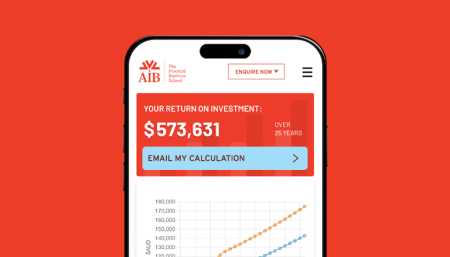
Ever wondered what an MBA could be worth?
Measure the MBA ROI with our calculator
Ever wondered what an MBA could be worth?
 Go to Canada Site