



 Enquire Now
 Receive a Brochure
 Check Your MBA Eligibility
 Reserve Your Spot
 Apply Today
 Refer a Friend



 Go back
Australia’s AI Revolution: Fuelling Job Growth and Wage Premiums

SHARE ON




We often hear that artificial intelligence is coming for our jobs. It’s easy to get caught up in the fear of mass displacement, but a comprehensive five-year labour market analysis released by the Australian Institute of Business (AIB) paints a very different picture. Far from destroying opportunities, AI is actively driving job growth, elevating wages and reshaping the future of work right here in Australia.
Drawing on extensive data, the new research brief Australia’s Jobs & AI Revolution provides data-backed proof that the AI economy is expanding. With Australia’s employment market hitting a record 14.7 million workers in May 2025 and a low unemployment rate of 4.1%, integrating AI is proving to be a catalyst for real workforce evolution.
The booming demand for AI skills
AI skills have quickly moved from a niche IT requirement to an everyday corporate must-have. Back in 2012, there were just 2,000 job postings seeking AI skills. Fast forward to 2024 and that number has skyrocketed by over 1,000% to 23,000 postings. This surge is backed by real adoption across the board. As of 2024, 1,532 different organisations are actively hiring for AI skills.
Creating jobs, not killing them
Perhaps the most surprising finding in the data is that jobs highly exposed to AI are actually growing. Between 2019 and 2024, overall net job availability in AI-exposed roles grew by 10%.
Breaking this down further reveals staggering growth in specific classifications:
- Augmentable Roles (where humans work alongside AI to enhance output) grew by 47%.
- Automatable Roles (where AI can independently perform some tasks) grew by 45%.
Why is AI expanding roles rather than replacing them? One major factor is structural labour scarcity. Employers are increasingly deploying AI to offset critical labour gaps and boost output instead of cutting headcount.
Beyond automation – smarter decision-making
While automation often grabs the headlines, the true value of AI inside organisations is much broader. Dr Sajjad Shokouhyar, Senior Lecturer and Discipline Leader in Operations and Supply Chain Management at AIB, notes that AI is fundamentally improving the quality, speed and evidence base of managerial decision-making.
AI’s real value is not limited to automation. “Its greatest organisational impact comes from helping managers convert large, complex and fast-moving data into timely and actionable decisions.
Drawing on his recent research into AI-enabled and social media analytics-based decision support systems, Shokouhyar highlights that navigating this landscape requires a dynamic blend of capabilities.
This is why the future workforce will need more than technical AI skills; professionals will also need analytical judgement, business understanding and the ability to apply AI responsibly to real organisational problems.
The massive 56% wage premium
The financial incentive to upskill in AI has never been higher. The wage premium for AI skills doubled from 25% in 2023 to 56% in 2024.

In real terms, an Australian worker equipped with AI competencies commands an estimated median salary of $143,000. That creates a massive $39,000 salary gap compared to the $104,000 median for the broader workforce.
Businesses are reaping the rewards too. Industries highly exposed to AI saw a 27% growth in revenue per employee between 2018 and 2024 – a near-quadrupling of productivity growth compared to the 9% growth seen in less-exposed sectors.
Roles on the rise vs. roles at risk
The Australian labour market is going through a major structural shift. According to LinkedIn’s Jobs on the Rise 2026 report, the fastest-growing job in the country is now the AI Engineer, which boasts a typical salary range of $130,000 to $170,000.
Conversely, highly routine roles are facing intense pressure. Because of this transition, McKinsey estimates that up to 1.3 million Australians, roughly 9% of the workforce will need to transition to new roles by 2030. At the same time, 200,000 entirely new AI-centric jobs are projected to be created by the end of the decade.
The shifting education landscape
As the nature of work transforms, employer expectations are shifting right alongside it. The skills required to perform existing jobs are changing 66% faster in AI-exposed occupations compared to non-exposed roles.
Interestingly, strict degree requirements for AI-exposed roles are beginning to fall as employers prioritise practical capabilities. Between 2019 and 2024, the proportion of AI-automatable roles requiring a degree dropped from 80% to 74%.
This highlights a critical shift: employers are looking for practical and alternative credential pathways that sit alongside formal qualifications. In this fast-paced and flexible market, continuous learning is an economic necessity. Organisations like AIB are empowering modern professionals to navigate this shift, ensuring that Australian workers don’t just survive the AI revolution – they lead it.
Sources:
- Australian Bureau of Statistics (ABS) Labour Force Survey, 2025: https://www.abs.gov.au/statistics/labour/employment-and-unemployment/labour-force-australia/may-2025
- ABS Wages Data: https://www.abs.gov.au/statistics/labour/employment-and-unemployment/labour-force-australia/may-2025
- Australian Department of Industry, Science & Resources: https://www.industry.gov.au/news/ai-driving-growth-jobs-research-and-innovation-across-australia
- LinkedIn Jobs on the Rise, 2026: https://www.linkedin.com/pulse/linkedin-jobs-rise-2026-15-fastest-growing-australia-w5xee/
- McKinsey Global Institute: https://www.mckinsey.com/featured-insights/future-of-work/jobs-lost-jobs-gained-what-the-future-of-work-will-mean-for-jobs-skills-and-wages
- PwC Global AI Jobs Barometer, 2025:https://www.pwc.com.au/services/artificial-intelligence/ai-jobs-barometer-report-2025.pdf

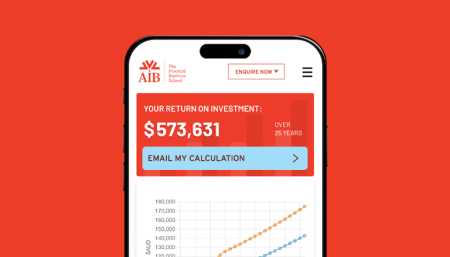
Ever wondered what an MBA could be worth?
Measure the MBA ROI with our calculator
Ever wondered what an MBA could be worth?

I’ve been playing LinkedIn Crossclimb regularly, and one thing that helped me improve was reviewing past puzzles and understanding the logic behind each clue. I recently came across https://patchesanswer.com/linkedin-crossclimb-answer-today, which provides daily answers along with explanations. It’s been really useful for spotting patterns instead of simply memorizing the solutions.
 Go to Canada Site