



 Enquire Now
 Receive a Brochure
 Check Your MBA Eligibility
 Reserve Your Spot
 Apply Today
 Refer a Friend



 Go back
How to study a Postgraduate Certificate without a degree

SHARE ON




If you’ve built your career through hands-on experience rather than formal education, you may have wondered whether postgraduate study is even an option for you. The good news is that, depending on the institution and your professional experience, it is possible to study a Graduate Certificate without a bachelor’s degree.
For many professionals, a Graduate Certificate in Management (GCM) can be a practical way to build leadership skills and gain formal recognition for existing experience to take the next step in their career without needing a traditional academic background.
Throughout this article, AIB Course Advisor Matthew Gardner shares how professionals can study the AIB GCM without a degree, what eligibility pathways are available and why many students are often more prepared than they realise.
TL;DR
- Yes, you can study a Graduate Certificate without a bachelor’s degree
- Work experience may qualify you for entry if you meet other eligibility criteria
- The AIB GCM is designed for working professionals without a prior degree and offers flexible online support
Can you do a GCM without a degree?
Yes, it is possible to study a GCM without a degree. Many people assume postgraduate study is only available to students who already hold a university qualification. However, some institutions recognise that professional experience can also demonstrate leadership capability, strategic thinking and readiness for further study.
AIB programs welcome people who followed different career paths. Almost half of AIB’s alumni began their studies without a prior degree, showing that non-traditional candidates can not only qualify, but also excel.
The AIB GCM is designed for working professionals and focuses on practical, real-world learning. This means your day-to-day experience in the workplace can be just as valuable as formal academic history when assessing eligibility.
Whether you’ve worked your way into leadership, built technical expertise over time, or taken on increasing responsibility throughout your career, there may be pathways available to help you start studying without a bachelor’s degree.
What are the GCM entry requirements if you don’t have a degree?
Without a degree, you can qualify for the AIB GCM if you meet one of the following academic qualifications criteria:
- A minimum of 5 years of relevant work experience of which at least 3 years of management experience or significant technical experience; or
- Graduate Management Admission Test (GMAT) with a minimum score of 550 and at least 3 years of relevant work experience.
Matthew shares more information on how AIB assesses work experience when determining eligibility.
“When we look at work experience, we’re really asking is ‘Has this person been operating in an environment where they’ve had to think, problem-solve and take responsibility?’
What I always say to people is, don’t undersell yourself when you’re thinking about that. Management doesn’t have to mean you had a corner office and a team of 10.
We look at what you’ve been doing day to day, not just what your job title says. If you’ve been running a team without a formal management title, or driving outcomes that others depended on, that’s what we want to hear about. Most people who come to us and think they might not qualify often haven’t thought about their experience in those terms before.”
Another pathway into the GCM without a degree involves completing the Graduate Management Admission Test (GMAT). Developed by the Graduate Management Admission Council, the GMAT is a standardised exam that is used and trusted by Business Schools globally, including Australia. You may qualify for the AIB GCM with a GMAT score of 550 or above and at least three years of relevant work experience.
AIB applicants must also meet other conditions including English Language Requirements and technical and computer requirements.
Find out more about AIB program entry requirements.
What is it like studying a GCM without an academic background?
For many professionals, the biggest challenge is not capability, it’s confidence.
If you haven’t studied in years, or you’ve never attended university before, postgraduate study can feel intimidating at first. Many prospective students worry they are “not academic enough” to keep up in a postgraduate environment.
According to Matthew, these concerns are extremely common.
“The most surprising aspect of being a course advisor is how common this feeling is with students, including students who have studied five, ten, fifteen years ago. When you’ve been doing something for long enough, the mountain always feels taller when you’re at the base and starting the journey. When you are looking at this program, it usually means that you are more equipped than you think you are.”
One of the advantages of the GCM is its practical learning approach. There are no exams or group projects, just practical assessment methods. Rather than focusing on theory, the program encourages students to connect concepts directly to real business challenges.
Matthew says this practical approach can actually benefit students entering through the work experience pathway.
“One of the things I hear most from students who come in through the work experience pathway is that the content clicks differently for them because they’ve lived it.

Our students start noticing differences in their work, even from their first subject (Leadership), about how their team interacts with them, the confidence to solve bigger problems and communicate ideas that will actually have an impact.”
AIB’s online delivery also provides flexibility for professionals balancing work and personal commitments. Students study at their own pace and access course materials when it suits them, while progressing through structured assessments.
“If you’re trying to juggle family and work, every hour toward study needs to count. It’s about being willing to engage, apply yourself and be open to connect the learning to your experience. You already have more of the foundation than you realise.”
What support is available for students without a degree?
Returning to study after years in the workforce can feel overwhelming, especially if you have never studied at a postgraduate level before. However, studying online doesn’t mean studying alone.
AIB provides a range of academic, administrative and wellbeing support services to help you build confidence throughout your studies. According to Matthew Gardner:
“I have never worked with a more passionate team committed to supporting students, especially the 49% who don’t come from academic studies, and don’t necessarily start with the confidence in their academic ability. We have built our support from the foundations with that in mind.”
Students have access to Online Learning Facilitators who help guide learning and clarify subject content. In addition, Academic Skills Advisors help with core study skills such as writing and research, and the library team assists with accessing academic sources and industry data. Students also have free access to practical tools such as Grammarly, Scite, Studiosity and LinkedIn Learning.
AIB’s student support teams assist students from application through to graduation,
This can include help with enrolment, navigating online study systems or understanding course progression. Wellbeing services are also available, including access to counselling and resources for students balancing study with work and personal commitments.
Matthew notes that many prospective students worry they will be left to figure things out on their own, but that is not the case at AIB.
“This is one of the most common concerns I hear, and honestly it’s the one I most enjoy addressing. You’re not thrown in and left to figure it out. AIB has dedicated academic support built into the experience from study skills resources through to direct access to academic staff.”
Is studying a GCM without a prior degree worth it?
For many professionals, along with gaining an accredited qualification, the GCM creates new career opportunities. As the AIB GCM focuses on practical application, students often begin seeing benefits in their workplace before they even complete the program.
According to Matthew:
“Even partway through the program, students start framing problems differently – they’re bringing structure to conversations at work, they’re putting their hand up for things they might have held back on before. By the time they graduate, the confidence isn’t just about having the credential – it’s about knowing they can operate at that level.”
For professionals who have developed their careers through experience rather than formal education, the GCM can provide both practical skills and formal recognition of their capability. Students may use the qualification to expand their business capability, pursue promotions, transition into senior leadership roles or prepare for further postgraduate study.
Matthew shares:
“I’ve seen people land promotions, make career pivots and step into leadership roles they’d been circling for years. The qualification gives them permission to back themselves.”
Explore whether a GCM aligns with your goals: Is a Graduate Certificate worth it?
Should you apply for a GCM if you don’t have a degree?
If you’ve been considering postgraduate study but assumed your lack of a bachelor’s degree would hold you back, you may be more qualified than you think. Real-world experience can contribute to your eligibility for a GCM.
As Matthew explains:
“We have students who have looked at studies for years finally take that first step in a moment of courage and realise they are far more capable than they thought.”
If you’re unsure whether you qualify, speaking with a Course Advisor can help clarify your options and identify the pathway best suited to your background and goals.
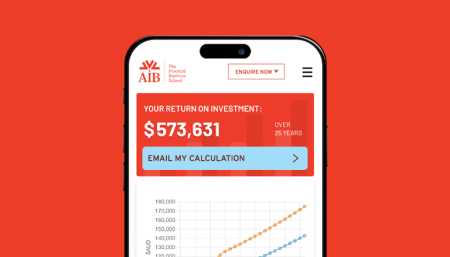
Ever wondered what an MBA could be worth?
Measure the MBA ROI with our calculator
Ever wondered what an MBA could be worth?
 Go to Canada Site